Eco corporate gifts: what you may say about the product
Eco corporate gifts are a familiar name in promotional product ranges, but the word ecological no longer works as a description of a corporate gift without evidence. New provisions under the Consumer Protection Act and the government decree supplementing it entered into force on 27 September 2026. Since then a general environmental claim, such as ecological, environmentally friendly or green, is banned in consumer marketing unless the claim can be backed by evidence of a recognised excellent environmental performance. In Finland the EU Ecolabel or the Nordic Swan Ecolabel can show that level.
A precise claim is still allowed when its basis is stated in the same place, for example "100% recycled cotton". Below we go through which words are dropped, which labels count, what domestic origin means and what is worth asking the supplier before the claim is printed on the gift or the gift card.
What the new rules ban
The provisions are based on EU Directive 2024/825. In Finland they are implemented by an amendment to the Consumer Protection Act (573/2026) and a government decree (664/2026), section 2 of which lists practices that are always unfair. The following points concern environmental claims:
- a general environmental claim, unless the trader can show a recognised excellent level of environmental performance that is relevant to the claim
- a sustainability label that is not based on a certification scheme and has not been confirmed by a competent authority
- an environmental claim about the whole product when the claim concerns only a particular part of the product
- a claim that the product has a neutral, reduced or positive environmental impact when the claim is based on offsetting greenhouse gas emissions
- presenting a requirement that the law sets for all products of the same product class as a feature of the offer.
In addition the new section 6 b of chapter 2 of the Consumer Protection Act concerns claims about a future level of environmental performance.
The Finnish Competition and Consumer Authority (KKV) published on 23 September 2026 a draft of the Consumer Ombudsman's guidelines "Sustainability and environmental claims in marketing". The draft is open for comments until 18 October 2026. The examples in this guide come from the draft, and the guide will be updated when the final guidelines are published.
Does this concern a gift bought by a business?
The Consumer Protection Act concerns marketing to consumers. According to the KKV draft guidelines the Act and the guidelines do not concern environmental claims in marketing between businesses. Between businesses the Act on Unfair Business Practices (1061/1978) applies, which bans untruthful and misleading statements. A misleading environmental claim is therefore not allowed between businesses either.
Many corporate gifts do end up with consumers: a trade fair visitor, an event participant or a customer without a business. An environmental claim can be text, an image or a symbol, and it can also be a label or a product name. When gifts are handed out to consumers the text printed on the gift, the packaging or the gift card should therefore follow the rules of consumer marketing.
The rules also concern the company's own message. According to the draft a general environmental claim needs the same evidence even when the company is talking about its own values. On the gift card of a gift given to a consumer, for example, "an environmentally friendly company" is a general environmental claim.
Which words are dropped
In the KKV draft general environmental claims include environmentally friendly, environmentally responsible, environment-saving, green, ecological, eco-friendly, nature friendly, climate friendly, energy efficient, biodegradable and bio-based. Responsible and sustainable are general sustainability claims in the draft. Sustainable is such a claim when it can be understood to mean something other than the product's durability in use. They cannot be backed by the EU Ecolabel or the Nordic Swan Ecolabel alone, and the KKV recommends a more precise claim instead.
An image can also be a claim. According to the draft a leaf, another nature symbol or a green colour scheme can form an environmental claim.
A claim is not general when its qualification is clearly and easily noticeable in the same medium. According to the draft the qualification cannot be behind a link or a QR code, on a different side of the packaging or elsewhere on the web page.
A precise claim states the material, its share and which part of the product the claim concerns. Examples from our range's product information:
- cotton bag: 100% recycled cotton, 140 g/m²
- beach bag: 70% recycled cotton and 30% recycled polyester
- notebook: cover 100% recycled paper
- water bottle: 90% recycled stainless steel.
A notebook with a recycled paper cover cannot be described as "made from recycled material". The claim would concern the whole product even though the basis concerns only the cover. The same applies to packaging: if only the gift box is recycled cardboard, the claim must state that it concerns the packaging.
This is how a general claim becomes precise:
- "An ecological bag" → "The bag is 100% recycled cotton."
- "An environmentally friendly notebook" → "The cover is 100% recycled paper."
- "A green choice" and a leaf symbol → the material and its share without a symbol
- "A carbon neutral gift" → leave it out.
A statutory requirement is not a product benefit
A requirement that the law sets for all products of the same product class on the EU market must not be presented as a special feature of your own offer. According to the KKV draft a product must not be marketed by stating that it does not contain a particular chemical substance if the substance is banned by law in all products of the same product class in the EU. For example Regulation (EU) 2024/3190 bans bisphenol A (BPA) in food contact materials. Describing a water bottle or a mug as "BPA-free" therefore presents a statutory requirement as a product benefit.
Which labels count
A sustainability label is allowed when it is based on a certification scheme or has been confirmed by a competent authority. In a certification scheme an independent third party verifies and monitors that the requirements are met. The labels tell different things:
- The EU Ecolabel and the Nordic Swan Ecolabel are official environmental labels under the ISO 14024 standard. According to the KKV draft, in Finland they can show a recognised excellent level of environmental performance, so a labelled product can be described, for example, as environmentally friendly or ecological. The claim must however concern what the label's criteria cover: biodegradable requires that the criteria include a biodegradability requirement. The Nordic Swan Ecolabel has criteria for, among others, textiles and bags, office and hobby supplies and printed products, but not for water bottles.
- GOTS tells the share of organically produced fibre and the processing of the textile. The organic label requires at least 95% and made with organic at least 70% certified organic fibre.
- OCS tells the share of organic fibre and its traceability, not the processing.
- GRS and RCS tell the share of recycled material. In an RCS label the share is 5–100%, and in the consumer-facing GRS label at least 50%.
- FSC and PEFC tell the origin of wood and paper. For example in an FSC Mix labelled product at least 70% of the material comes from FSC certified forests.
- Fairtrade tells the terms of trade: cotton farmers are paid at least a guaranteed price plus the Fairtrade premium.
- OEKO-TEX STANDARD 100 is a label for textiles that have been tested for harmful substances. It is not an EU Ecolabel or the Nordic Swan Ecolabel, so a general environmental claim cannot be backed by it.
None of our products currently carries the EU Ecolabel or the Nordic Swan Ecolabel, so we do not use general environmental claims for any product.
When a logo is printed on the product
The label only tells what the certification covers, and printing can change the situation. Under GOTS a seller adding print or embroidery to a certified finished product must itself be certified, and only a certified operator may make a GOTS label claim. Only the holder of an FSC certificate may print the FSC logo on a product or packaging. OEKO-TEX in turn does not allow advertising a finished product as certified based on the certificate of its fabric or another part.
So ask for the certificate name, number and validity period, and ask whether it covers the finished printed product and not just the fabric or the raw material. A label invented on your own, such as a web shop's own eco mark, is banned unless there is a certification scheme behind it.
Carbon neutrality and offsetting
A product must not be marketed as having a neutral, reduced or positive environmental impact if the claim is based on offsetting greenhouse gas emissions. Examples in the KKV draft are climate compensated, climate neutral, carbon neutral and a small carbon footprint. They are allowed only when they are based on the product's own impacts during its life cycle.
A company can tell about its investments in environmental projects as long as the message does not give the impression of a neutral or reduced environmental impact of the product.
A claim about a future level, such as "a 50% smaller carbon footprint by 2030", requires a ready implementation plan with measurable and time-bound targets. In addition an outside expert independent of the company must review the progress regularly.
Finnish corporate gifts: what domestic origin means
Domestic origin is not an environmental claim, but it must be true. According to the KKV draft a label telling about domestic origin must not be used if the product is not domestic. A plain domestic origin label, such as the Key Flag or the Finnish flag, is not a sustainability label, but combined with an environmental message it can become one.
Under the customs origin rules goods originate in the country where they were wholly produced or where the last substantial processing or working that is economically justified took place (the Union Customs Code, Article 60). Attaching labels to products and repackaging goods are not enough (Regulation (EU) 2015/2446, Article 34). Printing a logo in Finland therefore does not make a product manufactured abroad domestic, and a Finnish brand does not tell the country of manufacture.
A product manufactured in Finland with a domestic share of at least 50% of the cost price can receive the Key Flag symbol. The symbol is a community mark of the Finnish Work Association, and its use requires a right granted by the association. The Design from Finland mark tells about Finnish design, not the country of manufacture.
Our product pages show the country of manufacture or the country of origin when the manufacturer states it. For example some of the safety reflectors are manufactured in Finland. If the country of manufacture is not shown on the product page, ask for it in the quote request.
What is worth asking the supplier
- What material the product is, and how large a share of it is recycled or organically produced.
- Which part of the product the share concerns: the whole product, the fabric, the cover or the pages.
- What certificate the product has, its number and validity period, and whether it covers the finished product.
- In which country the product is manufactured.
- What can be said about the packaging if the claim concerns only the packaging.
Send the text and the logo to be printed on the gift with the quote request. Before production you receive a print proof to approve. Production starts once the proof has been approved.
On our product pages the material and its share are stated as the manufacturer reports them, and the product is not called ecological. Material information is shown on the product pages, for example, in the groups Cotton bags, Water bottles, Notebooks and Promotional textiles. You can ask for the product's certificate in the quote request.
Products whose material share is stated
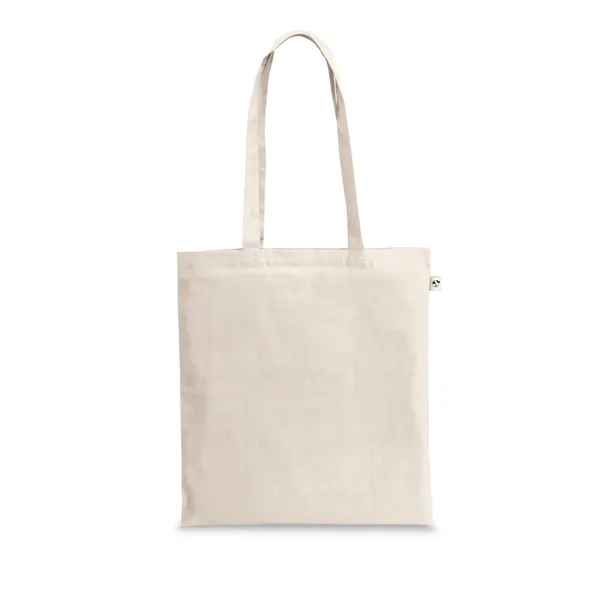
GIZA. Bag made from 100% recycled cotton (140 g/m²)
from€3.35€4.20/ pc
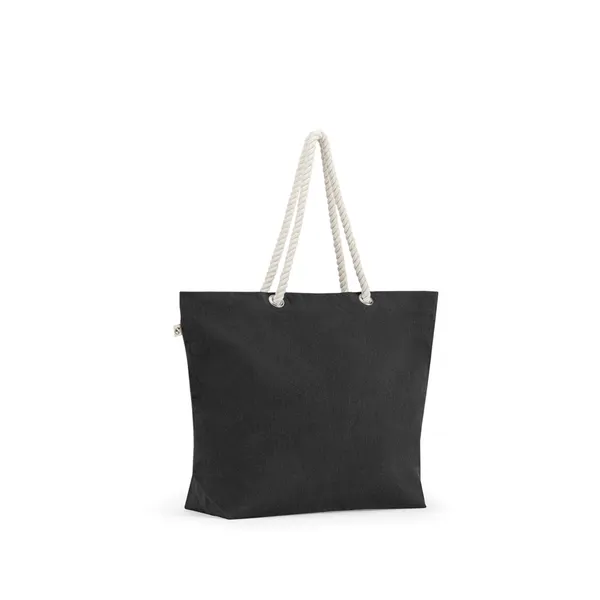
ATHENS. Beach bag in recycled cotton (70%) and recycled polyester (30%) (220 g/m²)
4 colours
from€7.40€9.29/ pc
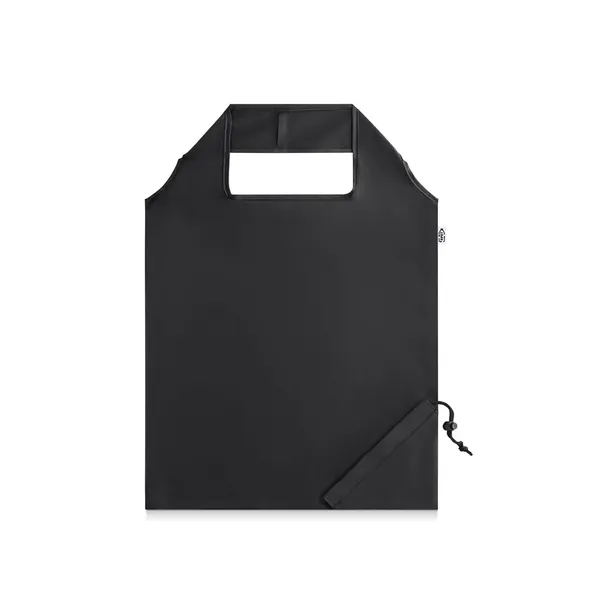
BEIRA. Foldable bag made from 190T recycled polyester (100% rPET)
6 colours
from€3.85€4.83/ pc
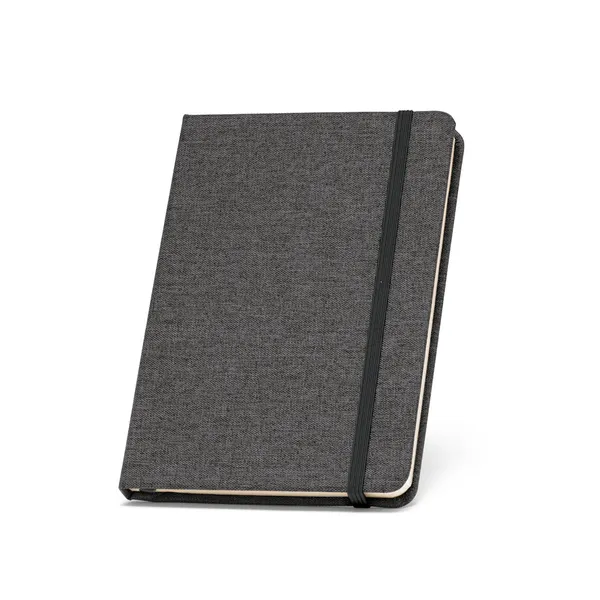
BOYD. A5 notebook in recycled polyester (100 % rPET) with lined sheets
2 colours
from€4.45€5.58/ pc
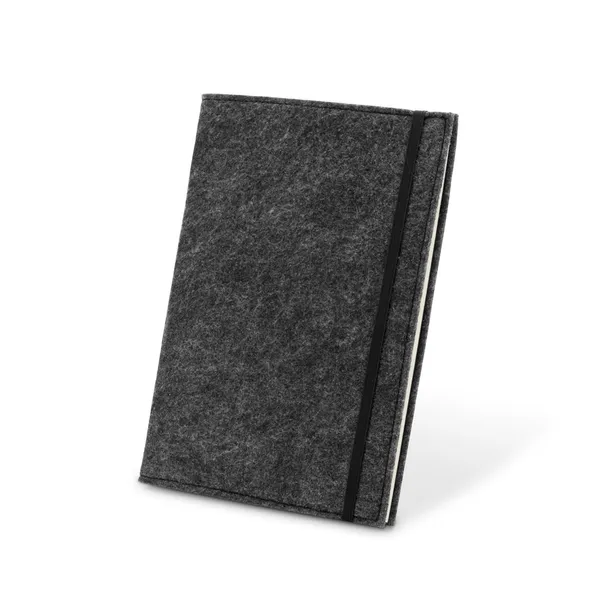
BALDWIN. A5 notebook with covers made from recycled felt (100% rPET) and lined pages of 100% recycled paper
from€5.15€6.46/ pc
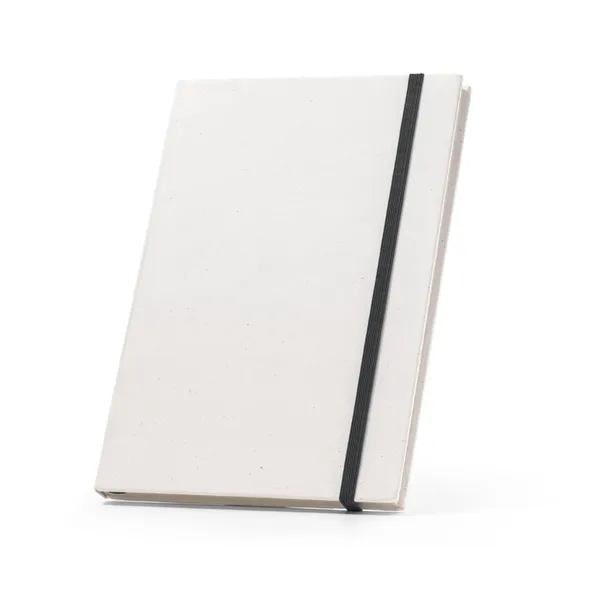
MILKY. A5 notebook with a rigid cover made from 100% recycled paper
3 colours
from€4.25€5.33/ pc
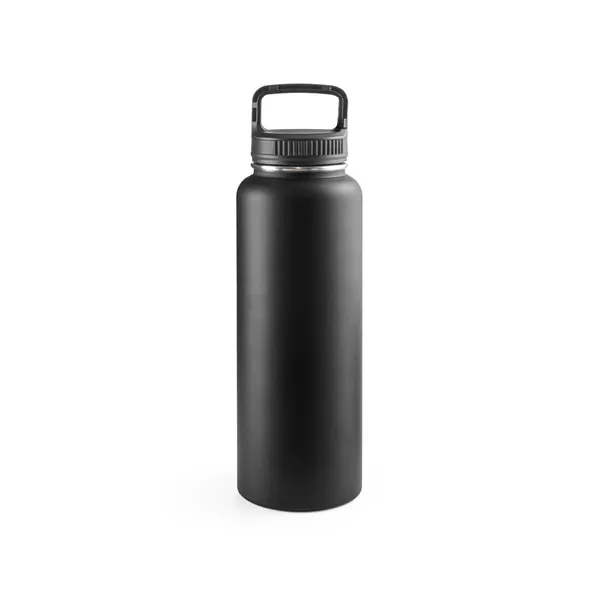
SINNER. Bottle made from 90% recycled stainless steel, with a capacity of up to 1200 ml
3 colours
from€17.00€21.34/ pc
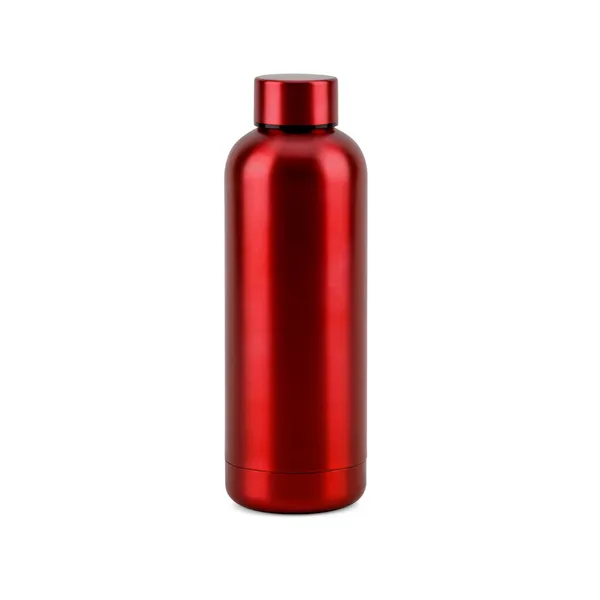
ODIN METTALIC. Bottle made of 90% recycled stainless steel, 550 ml
6 colours
from€8.75€10.98/ pc
Gift ideas for customers and partners can be found on the page Corporate gifts and client gifts, and the guide Corporate gift taxation: promotional gifts and business gifts tells about the taxation of gifts.
Sources
- Government decree on unfair commercial practices towards consumers in marketing and customer relationships (664/2026), given 2 July 2026, in force from 27 September 2026
- Act amending the Consumer Protection Act (573/2026), published 26 June 2026
- Directive (EU) 2024/825 on empowering consumers for the green transition, given 28 February 2024
- Finnish Competition and Consumer Authority: Sustainability and environmental claims in marketing, draft guidelines, published 23 September 2026
- Act on unfair business practices (1061/1978), sections 1 and 2
- Commission Regulation (EU) 2024/3190 on the use of bisphenol A in food contact materials
- Union Customs Code (EU) No 952/2013, Article 60, and Delegated Regulation (EU) 2015/2446, Article 34
- Finnish Work: rules of the Key Flag symbol
- Nordic Swan Ecolabel: criteria and EU Ecolabel: about the label
- GOTS: labelling and questions and answers
- FSC Finland: FSC trademark licence and OEKO-TEX: STANDARD 100 labelling guide
Frequently asked questions
Can a corporate gift still be called ecological?
In marketing aimed at consumers only if the product has the EU Ecolabel, the Nordic Swan Ecolabel or other recognised evidence of excellent environmental performance. Otherwise state the material and its share, for example "100% recycled polyester".
Is OEKO-TEX an environmental label?
No. OEKO-TEX STANDARD 100 is a label for textiles that have been tested for harmful substances. It is not an EU Ecolabel or the Nordic Swan Ecolabel, so a product cannot be called ecological based on it. The label can be checked in the OEKO-TEX Label Check service with the certificate number.
What does a GOTS certificate mean?
GOTS (Global Organic Textile Standard) is a certification scheme for textiles containing organically produced fibre. The organic label requires at least 95% and made with organic at least 70% certified organic fibre, and the latter must state the exact share. Only a certified operator may make a GOTS label claim, so ask whether the certificate covers the finished printed product.
Is a product printed in Finland domestic?
No. Printing a logo in Finland does not change the origin of a product manufactured abroad. A product manufactured in Finland can be called domestic.
What about products whose claim was printed before the new rules?
Under the decree the points concerning sustainability labels, general environmental claims and claims about the whole product apply to marketing included in goods or their packaging placed on the market before 27 September 2026 only from 27 March 2027. The transition does not concern claims based on offsetting or presenting a statutory requirement as a benefit.